
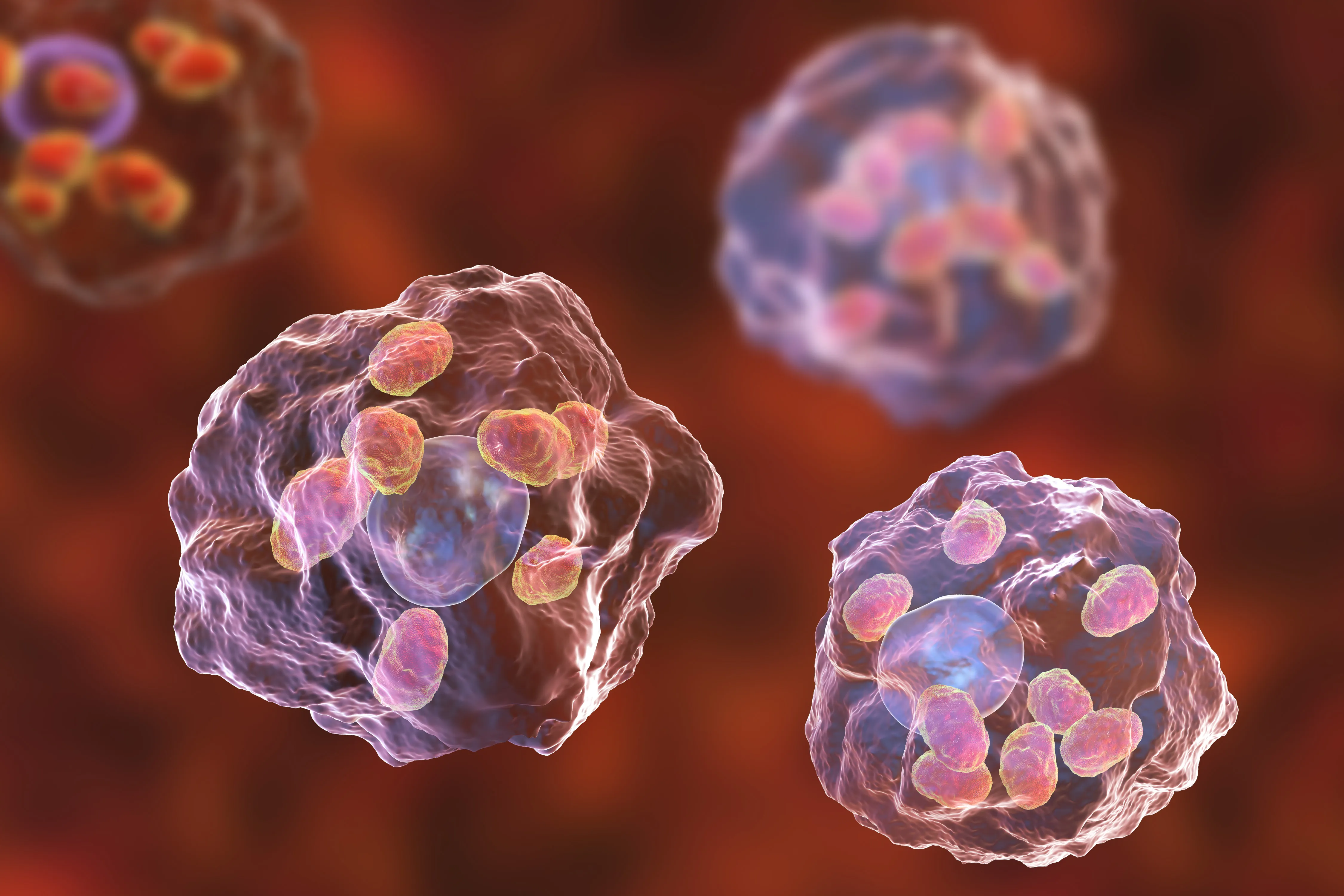
For decades, the global health community’s fight against cutaneous leishmaniasis has remained a clinical stalemate. Each year, the Leishmania parasite infects nearly one million people—primarily across the tropical regions of South America and North Africa—leaving patients with disfiguring lesions and deep social stigma.
While a standard treatment exists, it is an arduous, toxic regimen that fails in more than 50% of cases in countries like Colombia. For families in remote regions, the physical scars are often compounded by economic hardship; the disease can derail a child’s development and strip an adult of their ability to earn a living.
Now, a collaborative team from the University of Maryland and the Centro Internacional de Entrenamiento e Investigaciones Médicas (CIDEIM) in Colombia, also known as the International Center for Medical Training and Research, is launching a sophisticated new strategy that borrows a page from modern oncology.
Supported by a new $342,000 two-year research grant from the National Institute of Allergy and Infectious Diseases (NIAID), the team is pivoting away from traditional drugs to focus on host-directed therapy. This approach seeks to treat the infection by repurposing tools originally designed to fight cancer—specifically, inhibitors that prevent diseased cells from “switching off” the body’s immune response.
The funding supports Najib El-Sayed, a professor of cell biology and molecular genetics with an appointment in the University of Maryland Institute for Advanced Computer Studies; and Olga Fernández, coordinator of the Immunology and Cell Biology Laboratory at CIDEIM; to target a particularly devious subpopulation of the parasite known as zymodeme 2.3.
“Understanding these pathways allows us to identify how the parasite triggers host cell mechanisms to enable its own survival,” says El-Sayed, who is also a member of UMD’s Center for Bioinformatics and Computational Biology and the University of Maryland Institute for Health Computing.
This isn't a new threat; researchers have documented this specific resistant strain in patients for over four decades, during which it has consistently outmaneuvered standard medicine. In Colombia, patients infected with this 2.3 strain face a staggering 63% treatment failure rate—making them four times more likely to fail therapy than those with more sensitive strains. It acts as a persister pathogen, capable of going dormant within the body only to reemerge years later.
The parasite’s survival hinges on a biological heist: it hijacks macrophages—the body’s primary immune defenders—and forces them to stand down. Normally, these cells destroy invaders with a lethal burst of reactive oxygen species; however, the zymodeme 2.3 strain silences this defense by activating a metabolic “off-switch” involving the IDO1 and IL4I1 enzymes and the transcription factor AHR.
This mechanism reveals a striking parallel to oncology, as malignant tumors exploit this exact same signaling pathway to evade detection. By inducing a state of metabolic exhaustion, both cancer and the Leishmania parasite effectively trick the body into powering down its natural defenses.
Building on this, the newly funded NIAID project seeks to move from observation to active disruption.
Using primary human cells from 55 healthy donors and 12 specific clinical strains of the parasite, the researchers are now testing a trio of molecular “keys” to see if they can break this cloak. The team is now repurposing oncological inhibitors—specifically molecules like CB-668 and aryl hydrocarbon receptor inhibitors (AhRi)—to act as a molecular barrier. These inhibitors prevent the parasite from silencing the macrophage, ensuring the immune system remains awake and active.
In early tests using the inhibitor 1-MT, these tools successfully allowed immune cells to regain their primary weapon: a lethal burst of protective oxygen that destroys the invader.
This intervention is the logical evolution of the team’s previous breakthrough published in the journal PLOS Neglected Tropical Diseases in October 2025. In that study, the researchers discovered that the parasite doesn't just survive on its own—it actually reprograms the human immune cells it lives in to create a biological "cloaking device" that remains active even when strong medicine is introduced.
To track these changes, El-Sayed’s lab is employing a high-tech bioinformatics pipeline to analyze how tens of thousands of genes react to these inhibitors, verifying if the immune system's "operating system" has been successfully restored.
This strategy addresses a universal challenge in infectious disease research; the same off-switch is exploited by other major global pathogens, including the bacteria that cause tuberculosis and the parasites responsible for Chagas disease.
By cracking this code in Leishmania, the research team is essentially creating a manual for stripping away the “cloaking devices” of some of the world's most elusive pathogens. The ultimate objective is a precision one-two punch: a combination therapy that utilizes standard drugs to weaken the parasite, while employing a metabolic booster to keep the immune system from being deceived.
—Story by Melissa Brachfeld, UMIACS communications group