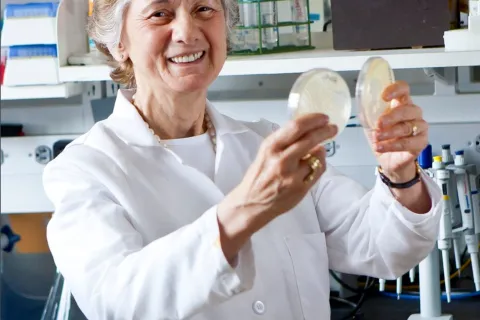
Colwell led a group of almost two-dozen senior scientists and public policy experts who provided guidance on a large-scale effort to investigate the impacts of oil, dispersed oil, and oil dispersants on the ecosystems of the Gulf of Mexico and affected coastal states.
In research published in the Proceedings of the National Academy of Sciences, researchers have found early, distinct changes that can determine which at-risk infants will develop the autoimmune disease.
Her most recent work focuses on investigating a specific neuronal cell type that syncs mammals' sleep/wake cycle—known as circadian rhythm—to the sun cycle.
The Advanced Genomic Technologies Core, part of the Brain and Behavior Institute, will advance high-throughput and advanced large-scale genomics research, and will greatly improve the university’s capabilities in neuroscience and other life sciences.
Colwell—still active in research, including multiple international efforts to stem the spread of cholera—talked candidly about the barriers she faced throughout her career as a woman scientist.
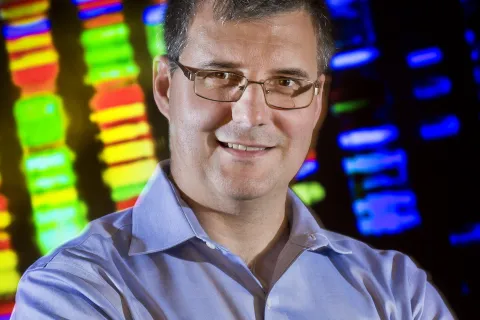
Being named an ACM Fellow is an elite recognition of outstanding science and scholarship that is bestowed upon less than one percent of the organization’s 100,000-plus members.
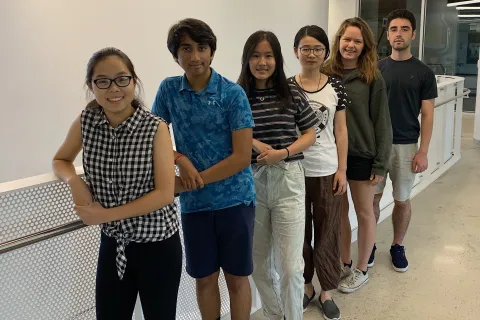
Four University of Maryland computer science doctoral students received prestigious NSF fellowships for their research in cybersecurity, automation, and bioinformatics, recognizing their outstanding academic and research achievements.